
Review Us CALL: 959 981 2206
VATECH LOYALTY PROGRAM

VATECH India!

  • ABOUT US
    • VATECH INDIA
    • VATECH NETWORK
    • OUR PHILOSOPHY
    • BLOG
    • BUSINESS FIELD
  • WHY DIGITAL
    • VATECH IS THE BEST
    • FILMS ARE MORE EXPENSIVE
    • FILM COST CALCULATOR
    • CONVENIENCE
    • DIGITAL SYSTEM
  • PRODUCTS
    • VALT
      • DENTAL LASER
      • AIR BRIDGE
      • SCANNER
    • INTRA ORAL
      • EzSensor Classic IOS
      • EzSensor HD
      • EzSensor Soft
      • EzRay Air Plus (New)
      • EzRay Air Portable X-Ray
      • EzScan (New)
    • EXTRA ORAL 2D
      • PaX-i
      • PaX-i Plus (New)
    • EXTRA ORAL 3D
      • PaX-i 3D Smart
      • Vatech A9 (New)
      • Green X (New)
      • Green X 12 (New)
      • Green X 18 (New)
      • Smart Plus (New)
    • CAD-CAM
      • Perfit-ZR Zirconia
    • CONSUMABLES
      • MEDICLUS
  • SOFTWARE
    • EZPMS
    • EzDent-i
    • Ez3D-i
    • Ez Mobile
  • VATECH123 SVC
  • DEALER REGISTRATION
  • NEWS
Register YourConcern RequestFREEDemo
  • Home
  • Radiology
  • Archive from category "Radiology"
August 3, 2026

Category: Radiology

RVG Sensor vs Traditional Dental X-ray: Which Is Better?
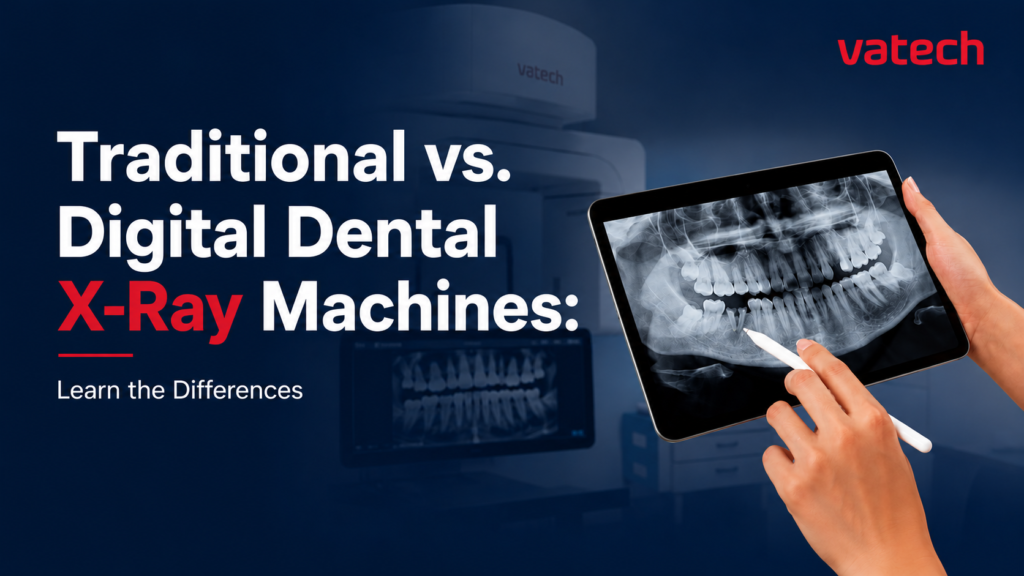
Thursday, 30 July 2026 by mywpadmin
RVG Sensor vs Traditional Dental X-ray

Dental technology has evolved significantly over the last decade, and one of the biggest advancements has been the shift from traditional dental X-rays to digital RVG sensors. As modern dental clinics focus on faster diagnosis, enhanced patient comfort, and efficient workflows, digital radiography has become an essential part of everyday practice.

If you’re planning to upgrade your clinic or purchase a new imaging system, you have probably wondered, “RVG Sensor vs Traditional Dental X-ray: Which is better?” The answer depends on several factors, including image quality, radiation exposure, workflow efficiency, patient experience, and long-term costs.

In this comprehensive guide, we’ll compare RVG sensors and traditional dental X-rays, explain how each system works, and help you determine which option is best for your dental practice.

What Is an RVG Sensor?

An RVG (RadioVisioGraphy) Sensor is a digital intraoral imaging device that captures dental X-ray images electronically instead of using conventional X-ray film. Once the X-ray is taken, the image appears almost instantly on the computer screen, allowing dentists to review, enlarge, and analyze it without waiting for film processing.

Today, RVG sensors are widely used in general dentistry, endodontics, implantology, prosthodontics, pediatric dentistry, and orthodontics because they provide high-resolution digital images with greater efficiency than conventional film-based systems.

Key Features of an RVG Sensor

  • Instant image acquisition
  • High-resolution digital imaging
  • Reduced radiation exposure
  • Easy image storage and sharing
  • Better diagnostic accuracy
  • Environmentally friendly workflow

 EczSensor Classic

What Is a Traditional Dental X-ray?

Before digital imaging became common, dentists relied on film-based dental X-rays to diagnose oral conditions. Traditional dental radiography uses photographic film placed inside the patient’s mouth. After exposure, the film must be processed using chemical solutions before the image becomes visible.

Although traditional X-rays have been used successfully for decades, they require additional time, physical storage space, and manual handling. Even a minor processing error can reduce image quality, sometimes requiring the dentist to repeat the exposure.

Many clinics continue to use traditional systems because of existing equipment, but digital technology is rapidly replacing film-based radiography due to its efficiency and diagnostic advantages.

How Does an RVG Sensor Work?

Unlike traditional X-ray film, an RVG sensor converts X-ray energy directly into a digital image using advanced electronic components such as CMOS (Complementary Metal-Oxide Semiconductor) or CCD (Charge-Coupled Device) technology.

The process is remarkably simple:

  1. The RVG sensor is positioned inside the patient’s mouth.
  2. A dental X-ray unit emits a controlled dose of radiation.
  3. The sensor captures the X-ray information.
  4. The image is converted into digital data.
  5. Within seconds, the image appears on the computer screen.

Dentists can immediately zoom, adjust brightness and contrast, measure anatomical structures, and even compare images over time without repeating the scan.

This instant workflow improves clinical efficiency while making diagnosis faster and more accurate

RVG Sensor vs Traditional Dental X-ray: A Quick Comparison

Before diving deeper into each aspect, here’s a side-by-side overview.

Feature

RVG Sensor

Traditional Dental X-ray

Image Availability

Instant

Several minutes

Image Quality

High-resolution digital

Depends on film quality

Radiation Exposure

Lower

Higher

Image Enhancement

Yes

No

Chemical Processing

Not Required

Required

Storage

Digital

Physical films

Image Sharing

Instant

Manual

Environmental Impact

Eco-friendly

Uses chemicals

Workflow Speed

Fast

Slow

Long-term Cost

Lower

Higher due to recurring film costs

From this comparison alone, it’s clear why digital imaging has become the preferred choice for modern dental practices.

Image Quality: Which System Delivers Better Diagnostic Accuracy?

One of the biggest reasons dentists are switching to digital radiography is the superior image quality offered by RVG sensors.

Traditional dental films produce fixed images that cannot be modified once processed. If the image is too dark, too light, or poorly positioned, another X-ray may be required.

An RVG sensor, on the other hand, allows dentists to enhance images instantly by:

  • Adjusting brightness
  • Changing contrast
  • Zooming into specific areas
  • Measuring distances accurately
  • Comparing previous radiographs
  • Highlighting anatomical structures

These tools help clinicians identify subtle pathologies that may be difficult to detect on conventional film, leading to earlier diagnosis and better treatment planning.

High-quality digital images are especially valuable for:

  • Implant planning
  • Root canal treatment
  • Detecting dental caries
  • Periodontal assessment
  • Monitoring bone levels
  • Evaluating periapical lesions

As diagnostic precision becomes increasingly important, RVG technology provides a significant advantage over traditional film-based radiography.

Radiation Exposure: A Safer Choice for Patients

Patient safety is one of the primary concerns in modern dentistry, and radiation exposure plays an important role when selecting an imaging system.

Digital RVG sensors are designed to be more sensitive to X-rays than conventional film, meaning they typically require less radiation to produce a diagnostic-quality image. Lower exposure can be particularly beneficial for patients who need multiple radiographs over time, such as those undergoing orthodontic treatment, implant therapy, or routine follow-up care.

While both traditional and digital dental X-rays are generally considered safe when used appropriately, the improved efficiency of RVG technology helps reduce unnecessary repeat exposures caused by processing errors or poor film quality.

For dental practices focused on delivering high-quality care with modern technology, this is another reason why digital radiography continues to gain popularity.

Workflow Efficiency: Why RVG Sensors Save Time

Time is one of the most valuable resources in a busy dental practice. Traditional X-rays require film processing, manual handling, and physical storage, which can slow down the diagnostic process. In contrast, an RVG sensor displays the image within seconds, allowing dentists to diagnose and begin treatment immediately.

A faster workflow means more efficient appointments, reduced waiting times, and improved patient satisfaction.

Benefits of a Faster Workflow

  • Instant image acquisition
  • No film processing or chemicals
  • Easy image sharing with specialists and labs
  • Quick access to previous patient records
  • Increased productivity in the clinic

Patient Comfort: A Better Experience

Today’s patients expect modern, comfortable dental care. Digital imaging helps improve the overall experience by reducing appointment time and eliminating the need to wait for film development.

Many modern RVG sensors are designed with slimmer profiles and rounded edges, making image capture more comfortable while maintaining excellent image quality.

A smoother diagnostic process also helps build patient confidence and trust in your practice.

Cost Comparison: Is an RVG Sensor Worth the Investment?

At first glance, a traditional dental X-ray system may appear less expensive because of its lower initial cost. However, over time, recurring expenses such as X-ray films, processing chemicals, maintenance, and physical storage increase the overall cost.

An RVG sensor requires a higher upfront investment but significantly reduces ongoing operational expenses.

Traditional Dental X-ray Costs

  • X-ray films
  • Processing chemicals
  • Film processor maintenance
  • Physical storage space
  • Film disposal

RVG Sensor Advantages

  • No recurring film costs
  • No processing chemicals
  • Digital image storage
  • Lower maintenance requirements
  • Better long-term return on investment (ROI)

For most growing dental practices, an RVG sensor proves to be a smarter long-term investment.

Conclusion

The comparison between RVG Sensor vs Traditional Dental X-ray clearly shows how digital radiography has transformed modern dentistry. While traditional film-based X-rays have played an important role in dental diagnosis for many years, they cannot match the speed, convenience, and precision offered by today’s digital imaging technology.

An Vatech RVG sensor provides instant image acquisition, enhanced diagnostic capabilities, lower radiation exposure, and a more efficient workflow. It also helps improve patient communication, reduces operational costs over time, and supports a more environmentally friendly practice.

For dentists looking to deliver high-quality care while staying competitive in an increasingly digital world, upgrading to an RVG sensor is a valuable long-term investment. By adopting advanced dental imaging solutions, clinics can enhance clinical outcomes, improve patient satisfaction, and build a future-ready practice.

Read more
  • Published in Radiology
No Comments

Digital radiography is increasingly becoming an integral part of every modern dental clinic

Thursday, 11 August 2016 by mywpadmin

Digital radiography is increasingly becoming an integral part of every modern dental clinic. Dentists are depending upon this innovative technology not just for diagnosis and documentation but also for treatment planning. As opposed to film based radiography, digital systems allow dentists to immediately view the images on any device including PC, laptop or any hand held device. In addition, the images are of a much higher resolution as compared to traditional film radiographs. Digital files are also much easier to store, share and retrieve. Since digital x-ray technologies use significantly lower radiation they are a safer option for both patients and clinicians. Digital radiography technologies are allowing dentists to capture images that were impossible with film based radiography and these are aiding more precise diagnosis and efficient treatment planning.

Investing in the right digital radiology product will enable dentists to enhance the quality and effectiveness of their services. It can also potentially lead to opportunities for building new capacities. There are broadly three types of digital imaging systems:

  • Intra-Oral x-ray sensors are a replacement for traditional film x-rays. These sensors make it easier to capture standard bitewings, FMX series and intra-oral radiographs. They are fast and use less radiation.
  • Digital panoramic x-rays are designed to capture a patient’s full arch in a single image;and
  • Dental core beam systems are powerful 3D imaging systems which are used primarily for dental implant treatment planning.

Vatech India is one of the fastest growing brands in the Indian dental radiology space. Vatech India provides a wide variety of digital radiology devices and software.

Their intra-oral range of products (including Ez Sensor, Ez Censor Classic and Ez Ray Air) are portable, easy to use and have superior image quality making them very popular among dentists. The products have been ergonomic designed to maximize patient comfort. In addition, they can be easily connected to mobile hand held devices.

Vatech India’s extra Oral 2D radiology device, Pax-I, has various capture modes which allow dentists to take precise and high quality two dimensional images for a variety of diagnostic requirements. Equipped with two dedicated sensors for pano / ceph it allows dentist to perform either of the scans without the hassle of changing the sensor. This feature also ensures longer life of the sensors.

The company also has as a part of its arsenal, powerful extra oral 3D radiology devices that allow dentists to get an accurate image of the extended oral cavity along with the maxillary and mandibular areas in a single scan. The Pax –i3d Green variant has a rapid scan time and provision for multiple FOV sizes which ensures accurate images and reduction in the amount of exposure to radiation. All Vatech India’s radiology products come with a five year guarantee and superior onsite support.

The company’s digital imaging software (including Ez-dent i, Ez-codi, Ez-smart and Ez-3di) serve as a hub for managing image files and as a tool for improved diagnostics, planning treatments and for explaining the same to the patient for greater acceptance and satisfaction.

Dental radilogydigital imagingExtra Oral 2DExtra Oral 3DEz Ray AirEz SensorEzSensor ClassicIntra-OralPax-iRadiologyx-ray technology
Read more
  • Published in Radiology
1 Comment

QUICK LINKS

  • VATECH INDIA
  • BUSINESS FIELD
  • WHY DIGITAL
  • CAREER
  • EVENTS
  • PRIVACY POLICY
  • CONTACT US
  • TERMS & CONDITIONS

OUR PRODUCTS

  • EzSensor Classic IOS
  • EzRay Air Plus
  • PaX-i Plus
  • Vatech A9
  • Smart Plus
  • Green X
  • Green X 18
  • Perfit ZR
  • Ekdant Autoclave
  • EzRay Air Portable X-Ray
  • Ekdant UV Cabinet
  • Ekdant Compressor

NEWSLETTER SIGNUP

By subscribing to our mailing list you will always be update with the latest news from us.

We never spam!

GET IN TOUCH

T : 9599812206
E: contactus@vatechindia.in

VATECH INDIA PVT. LTD.
NEW DELHI - INDIA.

  • GET SOCIAL

© 2016 All rights reserved.

Happy to Assist You…
TOP