
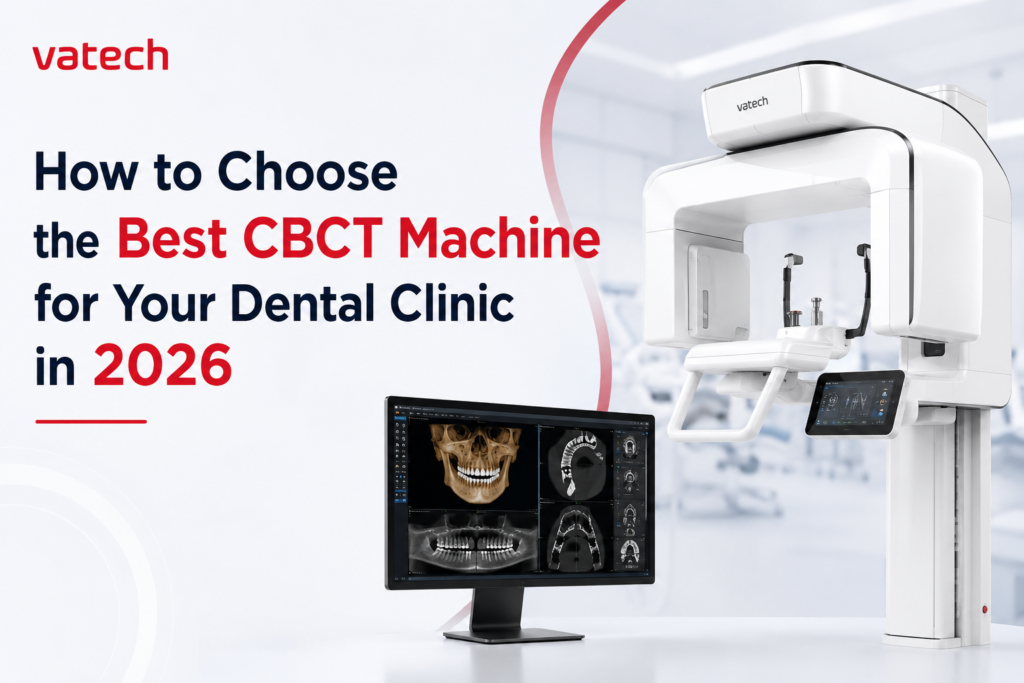
Choosing a CBCT machine for your dental clinic is no longer just about upgrading your equipment—it’s about investing in the future of your practice. As digital dentistry continues to evolve in 2026, dentists are expected to deliver faster diagnoses, more predictable treatment outcomes, and an exceptional patient experience. The right CBCT dental machine helps you achieve all three.
However, with so many brands, models, and technical specifications available in the market, selecting the best CBCT machine can quickly become overwhelming. Manufacturers often promote features such as higher resolution, larger Field of View (FOV), AI-powered software, and lower radiation doses. While these specifications are important, the real question every dentist should ask is: Which CBCT machine is the right fit for my clinic and my patients?
The answer isn’t always the most expensive system or the one with the longest feature list. The best Cone Beam CT machine is one that aligns with your clinical workflow, supports your long-term growth, and delivers consistent diagnostic accuracy.
Whether you’re setting up your first dental clinic, upgrading from a panoramic X-ray system, or expanding your implant and orthodontic services, this guide will help you make an informed decision. By the end of this article, you’ll know exactly what to look for when investing in a CBCT machine for your dental clinic.
Why Choosing the Right CBCT Machine for your Dental Clinic in 2026
The role of dental imaging has changed significantly over the past decade. Modern dentistry is no longer limited to treating visible problems—it focuses on precision, prevention, and patient education. A high-quality CBCT scanner provides detailed three-dimensional images that allow clinicians to visualize anatomical structures far beyond what conventional 2D radiography can offer.
Today, CBCT technology plays a crucial role in:
- Dental implant planning
- Orthodontic treatment planning
- Endodontic diagnosis
- Oral and maxillofacial surgery
- TMJ evaluation
- Airway assessment
- Impacted tooth analysis
- Surgical guide planning
More importantly, patients have become increasingly aware of advanced dental technology. They often associate modern equipment with higher standards of care. When patients see detailed 3D images of their oral condition, they gain a clearer understanding of their treatment needs, which can improve communication and increase treatment acceptance.
In short, investing in the right CBCT machine is not just about better imaging—it’s about building trust, improving efficiency, and supporting the long-term growth of your practice.
Before Comparing Machines, Understand Your Clinic's Needs
One of the biggest mistakes dentists make is comparing CBCT machines before defining their own clinical requirements. A machine that works perfectly for a large implant center may not be the best choice for a general dental practice.
Before evaluating any system, ask yourself a few important questions:
- What treatments do I perform most frequently?
- Am I planning to expand into implantology or orthodontics?
- How many scans will I perform each week?
- Will multiple doctors use the machine?
- Do I want a system that can grow with my practice over the next five to ten years?
Your answers will help determine the type of imaging system that best suits your workflow.
For example, a clinic focused on endodontics may prioritize ultra-high image resolution for detecting fine root fractures and complex canal anatomy. On the other hand, an orthodontic practice may require a larger Field of View to evaluate the entire craniofacial structure.
Choosing a CBCT machine for your dental clinic based on your actual clinical needs prevents unnecessary spending and ensures that every feature you invest in adds value to your practice.
Advantages of In-House 3D Imaging with CBCT
Adopting in house CBCT 3D imaging can provide your practice with numerous advantages. We encourage you to read our special article, The Benefits of In-House 3D Imaging Systems, for a thorough examination of these advantages.
The benefits are difficult to overlook, ranging from improving patient satisfaction to increasing referral rates and raising the value of your practice. CBCT technology can open up new revenue streams for your business by providing a greater variety of treatment alternatives and boosting patient confidence through accurate diagnosis.
Additionally, the market offers a wide variety of CBCT machines, each with special benefits. Purchasing CBCT scanners can result in considerable returns on investment, particularly in situations such as single or two implant surgeries, when a specific number of scans can produce a significant ROI.
CBCT vs. OPG: Which Imaging System Is Right for Your Dental Practice?
When choosing dental imaging equipment, many dentists compare CBCT (Cone Beam Computed Tomography) and OPG (Orthopantomogram). While both play an important role in diagnosis, they are designed for different clinical needs.
Understanding how these two imaging systems differ can help you choose the right technology for your practice and provide the best possible care for your patients.
CBCT: Detailed 3D Imaging for Advanced Dental Procedures
A CBCT machine captures highly detailed three-dimensional images of the teeth, jawbone, nerves, and surrounding anatomical structures. This level of detail allows dentists to diagnose complex cases with greater confidence and accuracy.
Because of its advanced imaging capabilities, CBCT has become the preferred choice for procedures such as dental implant planning, orthodontics, endodontics, oral and maxillofacial surgery, TMJ evaluation, and airway analysis. The ability to view the patient’s anatomy from multiple angles helps clinicians make more informed treatment decisions and reduce the risk of complications.
Which One Should You Choose?
The right choice depends on the type of treatments your clinic offers.
If your practice focuses mainly on routine check-ups and general dentistry, an OPG system may be sufficient for your day-to-day diagnostic needs.
However, if you regularly perform dental implants, complex root canal treatments, orthodontic procedures, or oral surgery, investing in a CBCT machine can significantly improve diagnostic accuracy and treatment planning. Its three-dimensional imaging provides information that simply cannot be captured with traditional panoramic X-rays.
Many modern dental clinics choose systems that combine both CBCT and panoramic imaging, giving them the flexibility to perform routine examinations as well as advanced diagnostics using a single platform. This approach not only improves workflow but also prepares the practice for future growth in digital dentistry.
Don't Overlook After-Sales Service and Technical Support
Purchasing a CBCT machine for your clinic is only the beginning of your journey. What truly determines the long-term value of your investment is the quality of support you receive after installation.
Before making your decision, ask questions such as:
- How quickly can the service team respond to a support request?
- Is technical support available in your region?
- Are genuine spare parts readily available?
- Does the company provide installation and hands-on training?
- Are software updates included?
- What warranty and maintenance options are offered?
Choosing a manufacturer with a strong service network can save both time and operational costs in the long run.
Why After-Sales Support Matters
A CBCT machine is a long-term investment, and consistent support ensures it continues to perform reliably for years. Fast response times, preventive maintenance, and access to experienced service engineers help minimize downtime and keep your practice running smoothly.
Choose a CBCT Machine with Low Radiation Dose
One of the most common concerns patients have about CBCT imaging is radiation exposure. Fortunately, advances in imaging technology have made it possible to achieve exceptional image quality while significantly reducing radiation dose.
Modern CBCT systems incorporate intelligent exposure settings, optimized scan protocols, and selectable Fields of View to ensure that patients receive only the amount of radiation necessary for accurate diagnosis.
When comparing CBCT machines, consider questions such as:
- Does the system offer low-dose imaging modes?
- Can exposure settings be adjusted based on the patient’s age or clinical need?
- Does the machine support small FOV scans to limit unnecessary exposure?
Choosing a CBCT machine that follows the ALARA principle—keeping radiation “As Low As Reasonably Achievable”—demonstrates a commitment to patient safety without compromising diagnostic quality.
Which CBCT Machine Is Best for Your Dental Clinic?
After understanding what makes a great CBCT machine, the next question is obvious: Which CBCT system actually delivers these features?
While every clinic has different requirements, some CBCT systems consistently stand out because of their image quality, software capabilities, reliability, and after-sales support. Here are some of the leading options available in 2026.
VATECH Green X
- Best For: Premium digital dentistry
- Strengths: Excellent image quality, multiple FOV options, AI-powered software, low-dose imaging, and reliable after-sales support.
- Considerations: A premium investment best suited for clinics seeking long-term value and advanced diagnostic capabilities.
VATECH A9
- Best For: High-volume and multi-specialty dental practices
- Strengths: Large Field of View (FOV), advanced diagnostics, and versatile clinical workflows.
- Considerations: Ideal for clinics requiring comprehensive imaging and handling complex cases.
Carestream
- Best For: General dental practices
- Strengths: Reliable imaging performance and a well-established global presence.
- Considerations: Features and capabilities vary depending on the model selected.
Planmeca
- Best For: Large dental practices and advanced clinics
- Strengths: Comprehensive digital ecosystem with integrated imaging and workflow solutions.
- Considerations: Higher overall investment compared to many competing brands.
Dentsply Sirona
- Best For: Clinics looking for integrated digital workflows
- Strengths: Strong software integration and digital treatment planning capabilities.
- Considerations: Premium pricing with a higher overall cost of ownership.
Conclusion: Invest in the Right CBCT Machine for Long-Term Success
A CBCT machine is more than just another piece of equipment—it’s an investment in the future of your dental practice. The right system can improve diagnostic accuracy, streamline workflows, increase patient confidence, and support a wider range of treatments, from routine consultations to complex implant surgeries and orthodontic cases.
While factors such as image quality, Field of View (FOV), software capabilities, radiation dose, and after-sales support are all important, your final decision should be based on the long-term value the system brings to your practice rather than the initial purchase price.
A high-quality CBCT machine can help reduce referrals, improve treatment acceptance, enhance patient communication, and create new opportunities for practice growth. Over time, these benefits contribute to a stronger return on investment (ROI), making the technology an asset rather than an expense.
If you’re looking for a CBCT solution that combines advanced imaging technology, flexible scanning options, intuitive software, and dependable after-sales support, VATECH offers a range of systems designed to meet the needs of modern dental practices. Whether you’re a general dentist, implantologist, orthodontist, or managing a multi-specialty clinic, choosing the right imaging partner today can help your practice stay ahead tomorrow.
Ready to upgrade your clinic with advanced CBCT technology? Explore VATECH’s range of dental imaging solutions and discover how the right investment can support better clinical outcomes, greater efficiency, and long-term practice growth.


